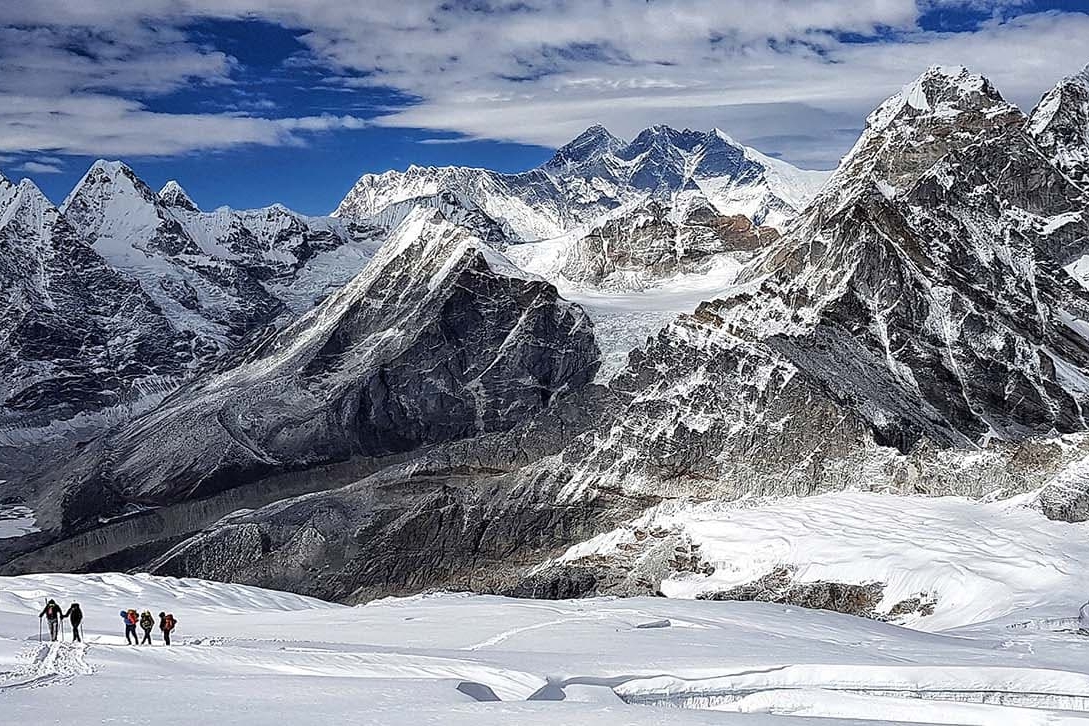
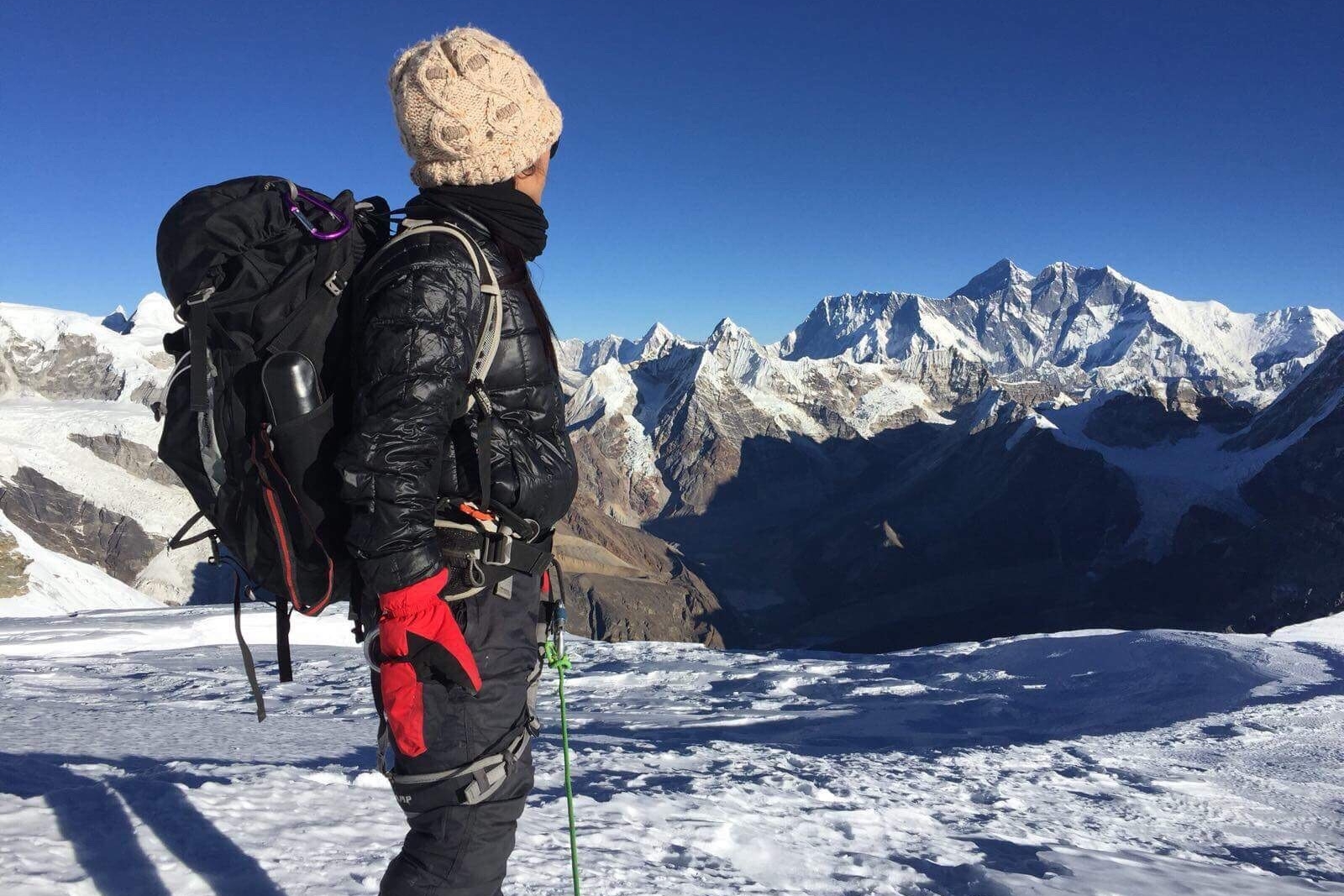
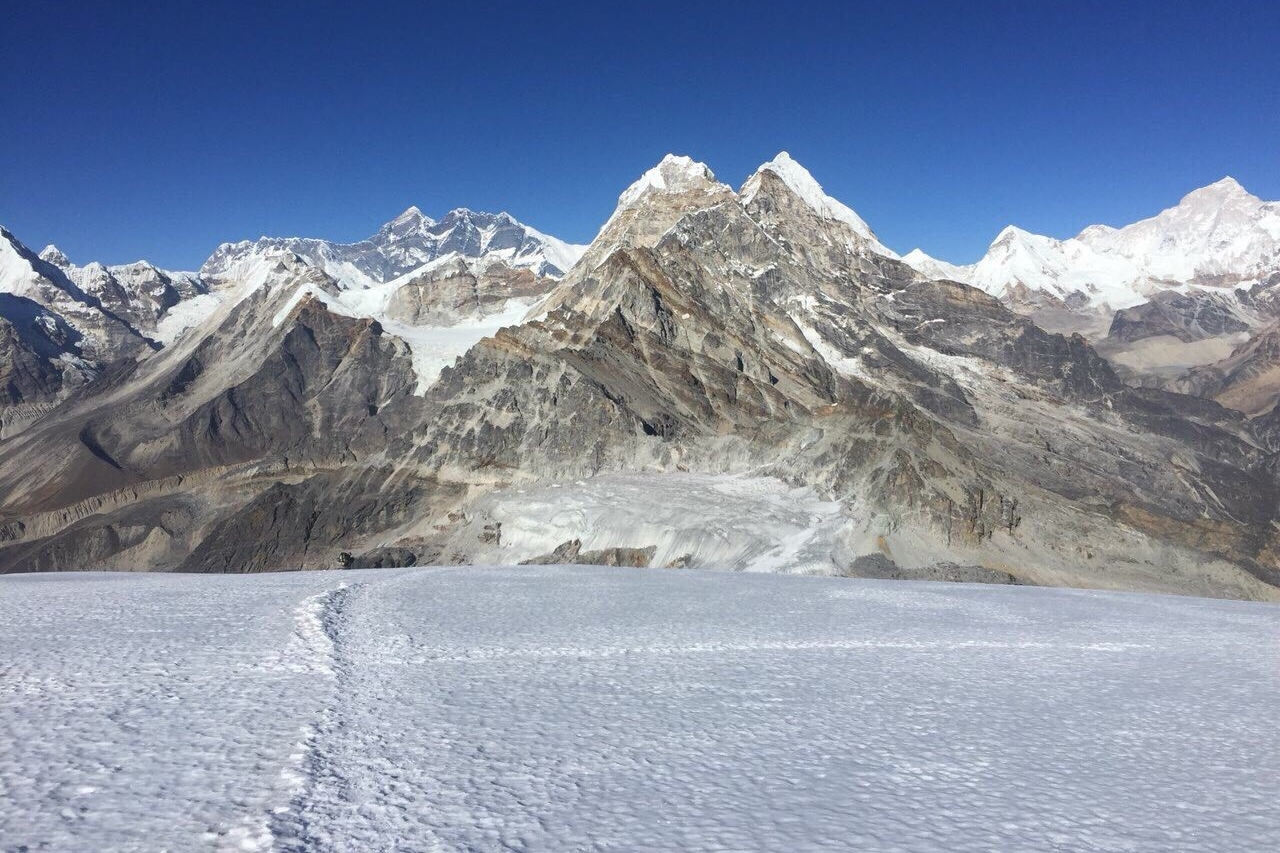
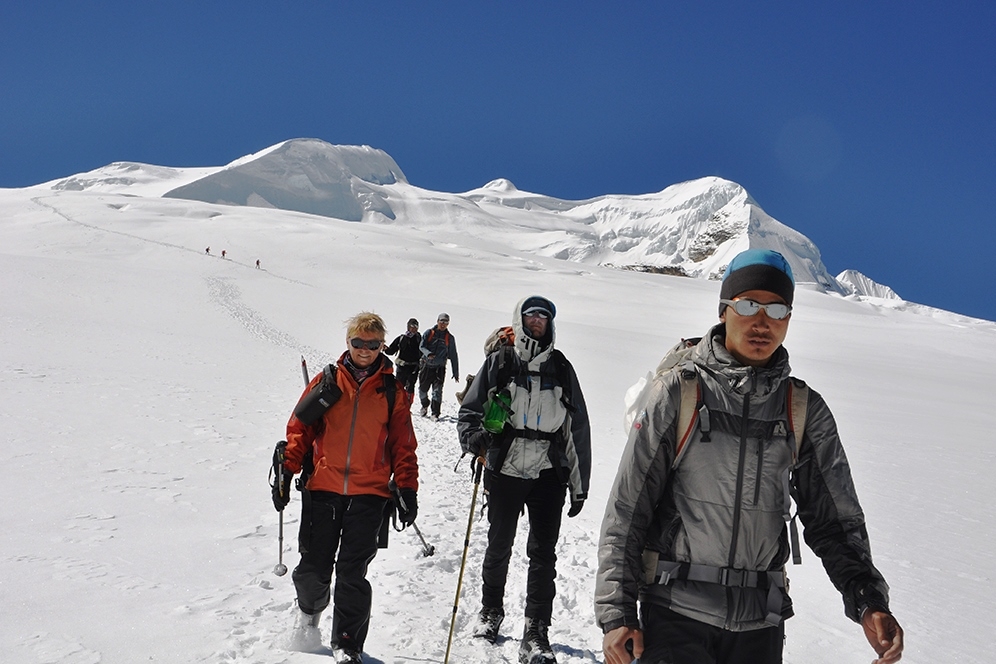
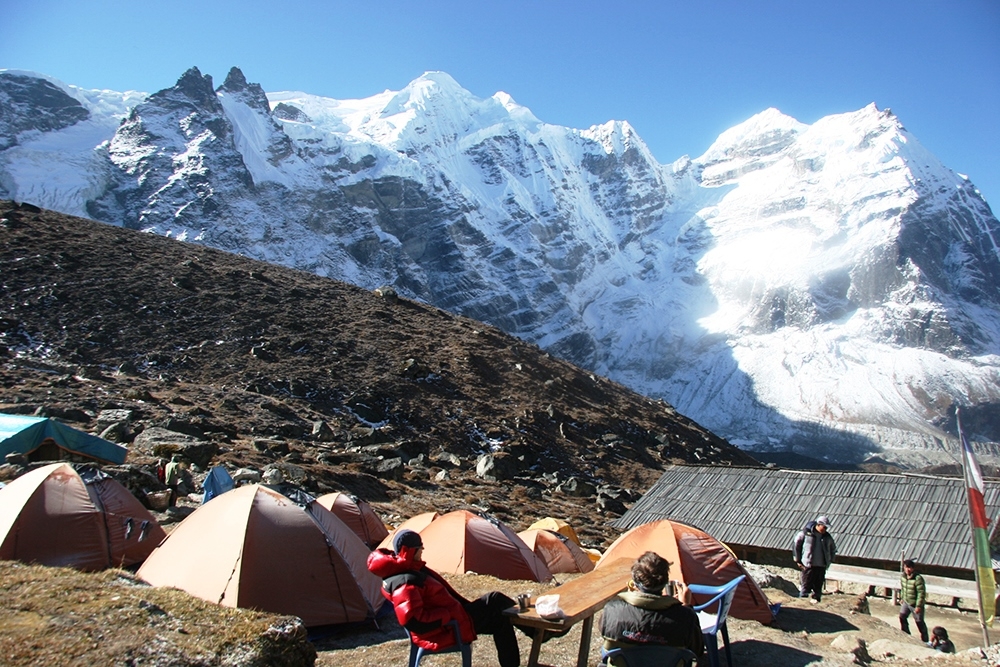
Mera Peak, at 6476m, is the highest trekking peak in Nepal. Technically, it is a simple ascent, with no other problems than those derived from its height and glacial conditions. Due to its altitude, the oxygen content of the air is less than half of what it is at sea level. If you have been on a high-altitude trek above 5000 m, then Mera is the perfect next adventure for you. You are fit to climb, and your body requires acclimatization to the altitude before taking on a climb like Mera Peak, so we have three extra days to conquer it. But it is an extreme altitude trek, which does mean that no matter how fit you are, climbing Mera Peak will be a tough challenge. It is challenging and requires a lot of stamina and endurance, as no technical skills are needed to complete the climb. It is definitely worth the effort! This expedition starts with the most exhilarating flight to Lukla. Approach up the Arun Valley, which will take you to its summit, and this peak has the appeal of being located in one of the least visited regions of the country and offering beautiful views over the Everest and Makalu region. During the trek, we will see local Sherpa cultural villages and their terraced farming lands, as they have done for generations. At the end of our trip, we have free time to explore the Kathmandu valley and its narrow, lively, and endless streets.
Gallery
Day by Day Itinerary
Pick up at Kathmandu International Airport, and transfer to the hotel. Rest of the day free to explore the city (Thamel area). In the afternoon prepare trekking material, final details of the itinerary, permits and welcome dinner. Accommodation at the hotel.
Very early in the morning, almost at dawn, we moved to the Ramechapp secondary airport (4-hour trip) to take a small plane flight of only 25 minutes to Lukla. (2,840 m). Lukla is a pretty Sherpa village and also the gateway to the Everest region. The views of the Himalayas during the flight are stunning. Landing on the short and narrow runway of Lukla airport is also a unique experience. After breakfast/lunch in Lukla we begin trekking and enjoy the beautiful landscapes to Chutanga. Instead of going along the road to Everest Base Camp, as soon as we land we take the path on the right that passes by the hospital and go up through a little-traveled valley. On this day we also meet the local team (porters) that will accompany us throughout the journey. Hostel accommodation.
We leave after breakfast in the direction of Tuli Karka. Today is a day with a lot of elevation gain and we may notice the effects of the altitude gained. We cross the Zatrawa pass (4,610m) and then go down to Chetrala (3,800m) to spend the night. This further favors the acclimatization process. The pass offers us a fascinating panorama and we can see the peaks of Numbur Himal, Kongdi Ri, Karyolang and others. Night in hostel.
After breakfast we set off because many ups and downs await us throughout the day. The path runs through heather slopes with the Hinku River below, descending to a waterfall formed by the union of two torrents. The surrounding forests are of great beauty. After crossing the river, we continue along the west branch until we reach the town of Khote. It is about five hours of walking and at the end of the route it offers us views of the southwest face of Mera peak. Night in hostel.
Acclimatization/rest day in Kothe. Optional 2.3-hour walk through the valley. If you can cross the river there is a beautiful walk that goes to the Dudh Kund lakes, about 5.6 hours. Night in Kothe.
Little by little the forest gives way to the open valley showing the surrounding peaks. The entire route we can enjoy fantastic views of the south face of Mera peak and also of the Sherpa villages. Along the way we can see a small Gompa on a rock wall, which contains some beautiful statues of Buddha. Today's entire route goes along the banks of the Hinku Drangka River. After about 4.5 hours of walking we reached the village of Thangnak where we spent the night. Optional climb to the hill behind the town to better acclimatize. Overnight in hostel in Thangnak.
Today our path climbs along the side moraine of the Dig glacier which offers good views over the Hinku Nup glacier and the surrounding mountains. The village of Khare is the last point of the trek before beginning the ascent of Mera peak. Walk for about 4 hours. Night in hostel.
Acclimatization day in which we can rest and enjoy the landscape that the environment gives us. There are many acclimatization routes, one of them ascends to the Mera hill, at 5,415 meters, about five hours of walking. Overnight in Khare in hostel.
Today we climb to the base camp of Mera peak. The road to the camp is steep and rocky, but in exchange it offers us beautiful views. After about 3, 4 hours of walking we arrived at the camp. We camp, have lunch and start the mountaineering course where the guide teaches us how to use the material and how to move on the snow/ice. (if possible, mountaineering course can be done in Khare village also). Accommodation in tents.
Today we go up to the high altitude camp, we do it along the glacier, a long ascent, but with a gentle slope, until we reach the location of the high altitude camp at 5,800 m. The view from the camp offers spectacular views of the world's most iconic peaks such as: Ama Dablam, Pumori, Everest, Makalu, Nuptse, Cho Oyu, Baruntse and Chamlang. This panorama is considered one of the best in Nepal. We arrived in about 5 hours, and spent the rest of the afternoon, eating and resting, preparing for the next day in which we will ascend to the summit. Night in stores.
We woke up at dawn (2 am) to start walking early and try to reach the summit shortly after dawn. The ascent to Mera peak is one of the easiest ascents to six thousand. You ascend the glacier. It does not have technical sections. It is a fairly progressive climb with slopes of about 20-30°. Near the summit the slope steepens (about 35-40°) and is eventually equipped with a fixed rope. Once at the summit we can enjoy some of the most beautiful views of the Himalayas. Among which we can see: Cho Oyu, Ama Dablam, Everest, Nuptse, the south face of Lhotse, Lhotse Shar, Baruntse, Makalu, Chamlang, Kangchengjunga, etc. The return is done along the same route, with great attention. The descents are always hard. We descend directly to the base camp, pick up and continue to Khare, where we spend the night in a hostel.
We continue the descent through the Hinku Dranka valley along the same path to the town of Kothe where we spend the night in a hostel. Walk of about 6 hours. Night in hostel.
We continue returning along the same path to the town of Thuli Kharka where we spend the night in a hostel. About seven hours of walking. Accommodation in a hostel.
Today is the last day of trekking and we continue with the descent to Lukla, the gateway to the Everest valley. Free afternoon to get to know the town a little and celebrate with your fellow travelers the success of having climbed Mera peak. Night in hostel in Lukla
Today we say goodbye to the Khumbu Valley. We take our small plane that takes us back to the secondary airport of Ramechapp from where we take the car to Kathmandu. 4.5 hours of travel. Transfer to the hotel. Free afternoon.
Free day for unforeseen events: altitude sickness, flight cancellations Lukla – Kathmandu, for the last purchases or to rest. Night in Kathmandu.
After breakfast at the hotel, departure to the airport or connection to another tour.
Includes
Meeting and Assistance on Arr./Dep. at the Airport or Hotel by Sampurna Adventure Representatives.
All transfers and tours on A/C vehicle as per group size
Nonalcoholic welcome drinks on arrival at hotel
Dbl / Sgl / Twin sharing room on Breakfast basis in Kathmandu
Monument entrance fees during mentioned city tour
English, Spanish, or any other major language spoken by an experienced local tour guide while on the tour in Kathmandu
Flight: RCH / LUA / RCH or KTM/LUA/KTM
Trekking and Peak climbing permit, national park fee,
Duffel Bag to carry luggage, First aid medicine kit
During Trek: Twin / Dormitory room in Guest house inclusive of 3 meals, breakfast, lunch & dinner,
One-night camping during Peak climbing with camping equipment, dining tent, sleeping tent, toilet
Official licensed English-speaking trek Sherpa guide,
One Porter for two trekkers basis to carry luggage (Permit max 12 kg. per trekker) Trekking permits
Every 3-person, 1 Peak climbing Sherpa guide basis
Due to any reason, expenses of any extra transfer, hotel accommodation, and other services abandoning the trekking or expedition trip before or after scheduled.
Any other service not mentioned in the column of services includes